Chinese last names carry thousands of years of history and deep cultural meaning. Many people around the world want to know their origins, stories, and hidden messages. Chinese Last Names: Complete List with Meanings helps you understand these important parts of Chinese identity.
Most Chinese last names are just one or two characters long, but their stories stretch back to ancient China. Learning them helps you know more about Chinese family culture, tradition, and history.
They are more than just labels—they connect people to their ancestors, their hometowns, and thousands of years of Chinese civilization.
Need a full Chinese name after choosing a surname?
Use the naming tool to pair a Chinese last name with a meaningful given name, then compare pinyin and cultural fit.
Whether you are exploring your own Chinese heritage, learning the Chinese language, or choosing a Chinese name for yourself, understanding these surnames opens a unique window into Chinese culture.
What Are Chinese Last Names?
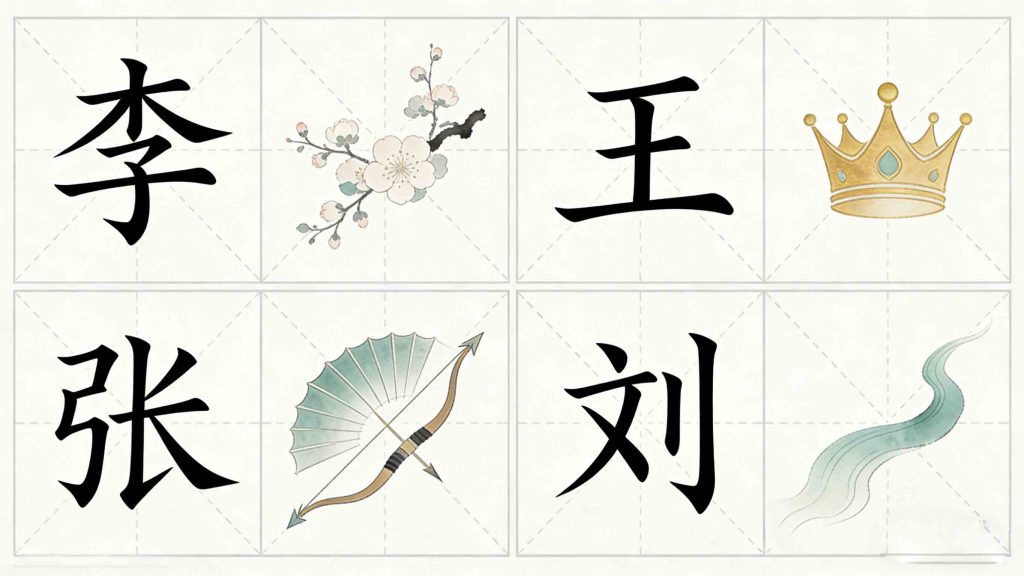
Chinese last names are also called surnames or xìng in Mandarin.
They always come before the given name.
This is the opposite of Western naming order.
Many Chinese last names have existed for over 2,000 years.
Some trace their roots to ancient Chinese states, rivers, mountains, or royal titles.
Others come from official positions, occupations, or ethnic minority groups.
Understanding Chinese last names helps you recognize your cultural roots.
In traditional Chinese culture, the surname represents the family line.
It is passed down from father to children for generations.
This strong family bond is a core value in Chinese society.
Even today, Chinese people value their last names deeply.
They see them as a living link to their family’s past and future.
Surnames also play a key role in Chinese social etiquette.
They help show respect and maintain proper social order.
The History of Chinese Last Names
Chinese last names have a history of over 5,000 years.
The earliest surnames appeared in the matriarchal society of ancient China.
Many early surnames included the radical for “woman” (女) in their characters.
This reflects the importance of maternal lineage in early Chinese culture.
During the Zhou Dynasty, surnames became a symbol of social status.
Only nobles and royal families could use surnames.
Common people did not have last names for centuries.
It was not until the Qin and Han dynasties that surnames spread to all people.
Over time, surnames evolved to reflect different aspects of life.
Some came from place names, others from occupations or titles.
Today, there are over 5,000 Chinese last names in use.
But just 100 common surnames cover more than 85% of the Chinese population.
This concentration makes Chinese last names a powerful part of cultural identity.
Top 10 Most Common Chinese Last Names with Meanings
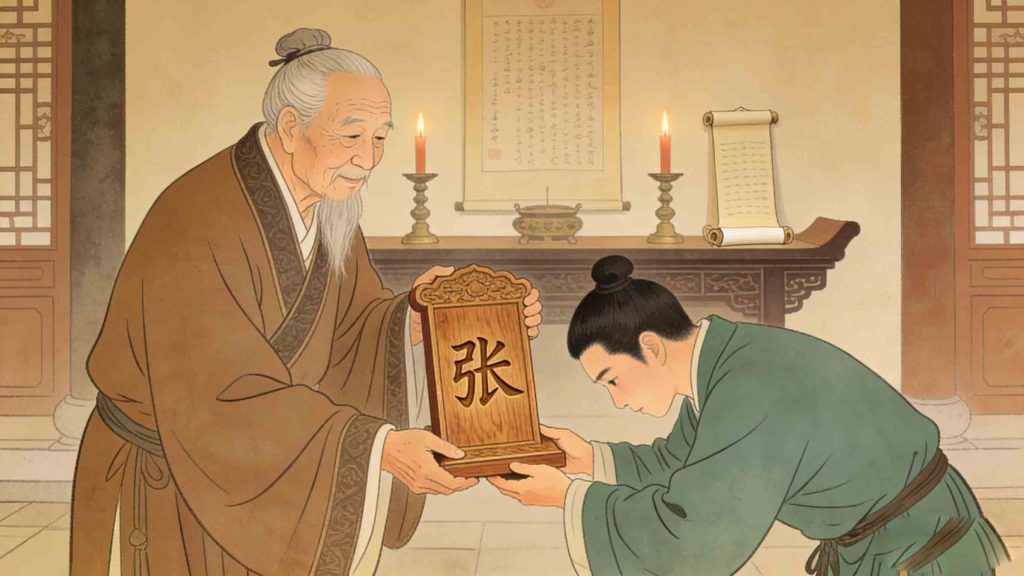
Some Chinese last names are used by hundreds of millions of people.
Here are the 10 most popular ones with clear meanings and origins.
Each has a unique story that reflects Chinese history and culture.
- 王 (Wáng): king; one of the most common Chinese surnames.
- 李 (Lǐ): plum; a surname with deep historical roots.
- 张 (Zhāng): to stretch or draw a bow; widely used across China.
- 刘 (Liú): associated with several imperial families in Chinese history.
- 陈 (Chén): an ancient state name and a very common family name.
- 杨 (Yáng): poplar or willow; often linked with strength and growth.
- 黄 (Huáng): yellow; connected with the Yellow River and Chinese civilization.
- 赵 (Zhào): an ancient state and a classic Chinese surname.
- 吴 (Wú): an ancient region and kingdom in southeastern China.
- 周 (Zhōu): linked with the Zhou dynasty and long cultural history.
Rare & Unique Chinese Last Names with Meanings
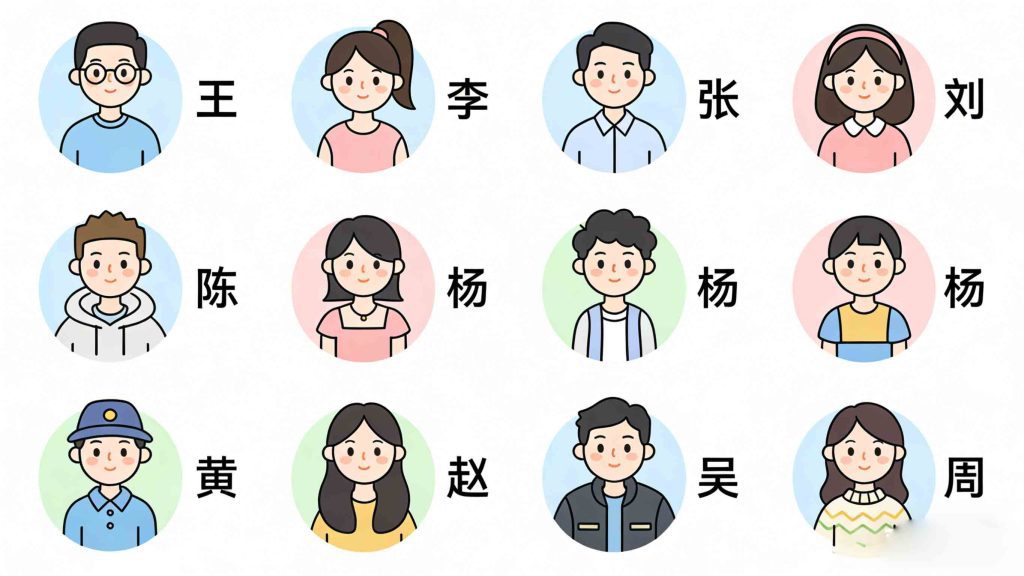
Not all Chinese last names are widely used.
Some are rare but full of deep meaning and history.
They show the diversity of Chinese family history and culture.
Many rare surnames come from ancient places, unique occupations, or ethnic groups.
They carry stories that are less known but equally important.
- Kong (孔): Means “hole” or “empty”. Most famously used by Confucius’ family, making it a symbol of Chinese culture and philosophy.
- Zhu (朱): Means “vermilion” or “bright red”. Linked to the Ming Dynasty royal family, making it a symbol of power and prosperity.
- Cai (蔡): Means “wealth” or “color”. Represents prosperity and talent, often linked to families of scholars and artists.
- Ding (丁): Means “tripod” or “stable”. Stands for firmness and tradition, connected to ancient ritual vessels and family stability.
- Jiang (江): Means “river”. Named after the famous Yangtze River, symbolizing endless flow and vitality.
- Ouyang (欧阳): A common two-character surname, meaning “south of the Ou River”. It has a history of over 2,000 years.
- Sima (司马): Means “official in charge of horses”. An ancient official title, famously used by historian Sima Qian, author of Records of the Grand Historian.
- Shangguan (上官): Means “high official”. A compound surname from ancient official positions, used by many noble families in history.
- Murong (慕容): A surname from the Xianbei ethnic group. Means “treasure” or “noble”, linked to ancient nomadic kingdoms.
- Ximen (西门): Means “west gate”. A compound surname from ancient place names, famously used by the magistrate Ximen Bao.
Compound Chinese Last Names: A Special Category
Most Chinese last names are one character.
But there is a special group of two-character surnames, called fùxìng.
These compound surnames are less common but full of history.
They often come from official positions, place names, or ethnic groups.
Many compound surnames have stories linked to ancient kingdoms and nobles.
For example, Ouyang comes from a place name in ancient China.
Sima comes from an official position in the Zhou Dynasty.
Murong comes from the Xianbei ethnic group in northern China.
Compound surnames are a unique part of Chinese last names culture.
They show the diversity and complexity of Chinese naming traditions.
Today, many compound surnames are still used by Chinese families.
They help preserve ancient cultural traditions and family lines.
Why Chinese Last Names Are Important
Chinese last names are more than just labels for identification.
They show family connections, history, and cultural identity.
Many people share the same last name across generations.
In Chinese culture, people with the same last name often consider themselves distant relatives.
This creates a strong sense of community and belonging.
Knowing Chinese last names with meanings helps you respect Chinese traditions.
It also makes communication with Chinese people more friendly and respectful.
When you understand the meaning behind someone’s last name, you show you care about their culture.
It helps you build deeper connections and avoid cultural misunderstandings.
For people of Chinese descent, learning their last name’s meaning is a way to connect with their roots.
It helps them understand their family’s story, heritage, and place in history.
Surnames also play a key role in Chinese genealogy and family history research.
They help people trace their family lines back hundreds of years.
How to Use Chinese Last Names Correctly
When addressing someone in Chinese, always use the last name first.
Add a polite title like “Mr.” or “Ms.” after the last name.
For example, Mr. Wang is called Wang Xiansheng in Chinese.
Ms. Li is called Li Nüshi.
Never mix up the order of last name and given name.
This is a basic rule of Chinese social etiquette.
Mixing up the order can be seen as disrespectful.
In formal settings, always use the last name plus a title.
Only use the given name with close friends or family members.
This is a key rule in Chinese social interaction.
Following these rules helps you make a good impression.
It also shows you understand and respect Chinese culture.
When writing Chinese names in English, you can write the last name first or last.
But it is best to follow the Chinese order: last name first, given name second.
This helps avoid confusion and shows respect for Chinese naming traditions.
How to Choose a Chinese Last Name
If you want to choose a Chinese last name for yourself, there are a few tips.
First, pick a surname that has a meaning you like.
For example, if you want a name that means strength, you can choose Li or Wang.
If you want a name linked to nature, you can choose Yang (poplar) or Jiang (river).
Second, consider the pronunciation.
Choose a surname that is easy to pronounce in your native language.
Third, learn the history and meaning of the surname.
Make sure it aligns with your values and personality.
Finally, check if the surname is common or rare.
Common surnames are easier for Chinese people to recognize.
Rare surnames can help you stand out and show your unique style.
Choosing a Chinese last name is a fun way to connect with Chinese culture.
It helps you build a deeper understanding of Chinese traditions and history.
More Chinese Name Resources
Final Thoughts
Chinese last names are meaningful, historic, and full of culture.
A complete list with meanings makes them easy to learn and remember.
Whether you study Chinese culture, make Chinese friends, or choose a Chinese name, these surnames offer great value.
They are a window into thousands of years of Chinese history, philosophy, and family values.
Take time to explore the stories behind these surnames.
You will gain a deeper understanding of Chinese culture and identity.
Each surname carries a unique story that connects the past, present, and future.
They are more than just words—they are living symbols of Chinese civilization.
If you want to find a suitable male Chinese name to pair with your last name, you can use our Chinese Boy Name Generator
For more authoritative background about Chinese surnames, their history, and cultural significance, you can visit the Wikipedia: Chinese surname page, which offers a comprehensive guide to Chinese naming traditions.
发表回复