Choosing a Chinese name for restaurant is a crucial branding decision. The right name attracts diners and creates lasting impressions.
Chinese restaurant names combine culinary heritage with marketing appeal. They honor food traditions while building strong customer loyalty.
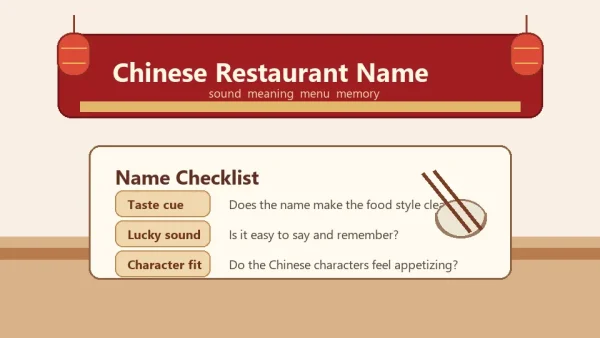
This guide shares 10 expert tips for selecting an appetizing Chinese name for restaurant. You’ll learn about lucky characters, meanings, and naming strategies.
Why Chinese Names for Restaurants Matter
A Chinese name for restaurant shapes dining experience and business success. Chinese culture believes names influence customer flow and restaurant prosperity.
Restaurant owners carefully select characters that represent delicious food, warm hospitality, and good fortune. The name becomes a memorable brand.
Understanding AI Name Maker: 15 Best Tools to Generate Perfect Names (2026) helps you choose wisely and create strong market presence.
10 Tips for Choosing a Chinese Name for Restaurant
1. Choose Appetizing Characters
Chinese names for restaurants traditionally use appetizing, welcoming characters. These represent delicious food, warmth, and satisfaction.
Popular characters include 香 (xiāng, fragrant), 味 (wèi, flavor), 鲜 (xiān, fresh), and 美 (měi, delicious).
These characters create positive associations and attract hungry customers.
2. Consider Cuisine Type
Many Chinese names for restaurants use cuisine-specific characters. These communicate specialty and authenticity.
Common choices include 川 (chuān, Sichuan), 粤 (yuè, Cantonese), 湘 (xiāng, Hunan), and 鲁 (lǔ, Shandong).
Each character carries specific culinary meanings and regional associations.
3. Balance Tradition and Creativity
Modern Chinese names for restaurants balance traditional values with creative appeal. Restaurant owners want names that honor heritage while attracting diverse diners.
Characters like 新 (xīn, new) and 雅 (yǎ, elegant) represent modern dining. Combined with traditional food characters, they create balanced names.
This approach honors culinary roots while embracing innovation.
4. Check Cultural Meanings
Every character in a Chinese name for restaurant carries cultural significance. Some combinations create unintended meanings.
Research each character’s history and food associations. Consult native speakers about potential issues.
Professional Chinese Name Translation: 10+ Ultimate Guide for Beginners (2026) services provide cultural validation and expert guidance.
5. Consider Pronunciation
Your Chinese name for restaurant should sound inviting and memorable. Avoid harsh consonant combinations.
Test pronunciation with native speakers. Ensure the name flows naturally in conversation.
Consider how it sounds in different Chinese dialects if serving diverse communities.
6. Use Lucky Numbers
Chinese numerology influences restaurant naming decisions. Count the strokes in your chosen characters.
Lucky stroke counts for restaurants include 11, 13, 15, 16, 18, 21, 23, 24, 25, 31, 32, 33, 35, 37, 38, 39, 41, 45, 47, 48, 52, 57, 61, 63, 65, 67, 68, 73, 75, and 81.
This adds positive energy to your Chinese name for restaurant.
7. Research Local Competition
Study how nearby restaurants name their businesses. Check if your area follows naming patterns.
Some neighborhoods prefer traditional names. Others choose modern, fusion-style names.
Discuss local trends with business advisors before finalizing your choice.
Contemporary Chinese names for restaurants allow menu growth. Restaurant owners seek names that work across dish categories.
Research naming trends in your cuisine type. Balance specificity with flexibility.
Your AI Name Ideas: 10+ Creative Ways to Generate Perfect Names in 2026 should feel both authentic and adaptable.
9. Test Customer Appeal
If your restaurant serves diverse customers, consider how the Chinese name for restaurant resonates. Choose characters with clear meanings.
Avoid combinations that create confusion. Many restaurants select names that communicate food quality in any language.
This helps your business attract broad customer bases comfortably.
10. Verify Name Availability
Some Chinese names for restaurants become unavailable due to local registration. While unique names have appeal, availability matters too.
Research naming regulations in your area. Find the balance between distinctive and available.
A legally clear name helps your restaurant avoid future complications.
Popular Chinese Names for Restaurants
Current popular Chinese names for restaurants include:
香满楼 (Xiāngmǎnlóu) – fragrance fills the building
味之源 (Wèizhīyuán) – source of flavor
鲜美居 (Xiānměijū) – fresh and delicious place
福临门 (Fúlínmén) – fortune arrives at the door
雅座轩 (Yǎzuòxuān) – elegant dining pavilion
These names combine positive meanings with strong dining appeal.
Common Mistakes to Avoid
When choosing a Chinese name for restaurant, avoid these mistakes:
Using overly complex characters – Choose characters customers can remember easily.
Ignoring pronunciation – Sound matters as much as meaning.
Following trends blindly – Balance popularity with brand uniqueness.
Rushing the decision – Take time to research thoroughly.
Learning from AI Generator for Names: 5 Key Things to Know in 2026 helps you avoid these pitfalls.
FAQ About Chinese Names for Restaurants
How many characters should a Chinese name for restaurant have?
Most Chinese restaurant names have two to four characters total. Two-character names are concise and memorable. Three or four-character names allow more meaning and atmosphere.
Can I use the same character as nearby restaurants?
While legally possible, using identical characters as nearby competitors creates confusion. Choose characters that differentiate your restaurant while fitting local dining culture.
Should the Chinese name for restaurant match the English name?
Not necessarily. Some restaurants choose independent names for each language. Others select Chinese names with similar sounds to English names. Both approaches work well depending on your customer base.
When should I finalize my restaurant’s Chinese name?
Finalize your Chinese name for restaurant before business registration and menu printing. Changing names later involves signage costs and brand confusion.
Can I change my restaurant’s Chinese name later?
While legally possible, changing a Chinese name for restaurant carries significant costs and complications. Choose carefully from the start to avoid rebranding expenses.
Do Chinese names for restaurants follow fashion trends?
Yes, naming trends exist. Certain characters become popular in different eras. However, classic restaurant names remain timeless and trustworthy.
How important is the meaning versus the sound?
Both matter equally. A Chinese name for restaurant should have positive meaning AND sound inviting. Never sacrifice one for the other in restaurant naming.
For more information, visit Wikipedia.
发表回复